Last 30 Days to SPM: This Plan Could Get You an Extra A
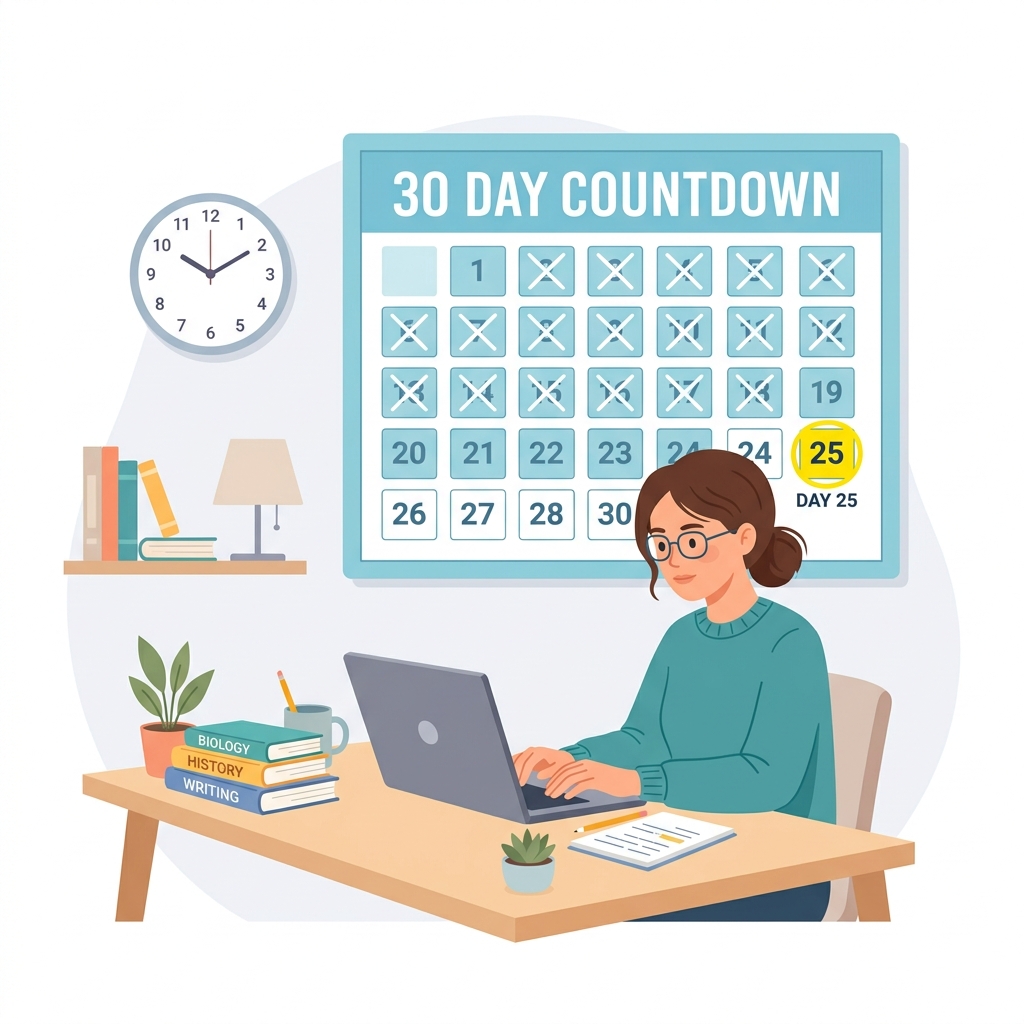
Last 30 Days to SPM: This Plan Could Get You an Extra A
Most students spend their final 30 days like this: flipping through books anxiously, doing random practice questions, staying up late with zero efficiency. They think they "tried their best," but they've actually burned time on low-impact activities.
30 days is more than enough. But only if you stop "reviewing" and start "scoring."
The plan below isn't a suggestion—it's an operational command. All you have to do is execute.
Week 1: Stop the Bleeding (Day 1–7)
The goal is to stop losing marks, not to learn new things.
Day 1: Make a "Loss List"
Take out your latest set of mock exam papers. Don't grade them. Just look at the questions you got wrong:
- Which ones were careless mistakes? (Wrong number copied, misread instructions)
- Which ones were formula errors?
- Which ones did you not even understand the question?
Categorise them. You'll find that at least 30% of the marks you lost could have been kept.
Day 2–4: Eliminate "Avoidable Errors"
For the list from Day 1, do three things per subject:
- Careless mistakes – Before each practice session, write "Read the question again" on your scrap paper. When checking your answers, only look at the question text, not your own answer.
- Formula errors – Write the 5 formulas you often mess up on sticky notes and stick them on the corner of your desk. Recite them from memory every day before you start practice.
- Can't understand the question – It's not that you don't know the content; it's that you're not familiar with the question type. Go through past year papers and just look at the question formats—don't look at the answers.
Day 5–7: Timed Full Paper Practice
Pick your weakest subject and do a complete past year paper. Strictly timed.
The goal isn't to finish. It's to feel the pressure of time. After you're done, do only one thing: mark every question where you were stuck for more than 3 minutes. These are your "time black holes."
Week 2: Attack High-Frequency Topics (Day 8–14)
Don't look at topics that won't be tested. Spend little time on low-mark topics. Only focus on high-frequency, high-mark chapters.
How to Find High-Frequency Topics?
Open past year papers (at least the last 5 years). Count:
| Chapter | Appearance (past 5 years) | Average Marks |
|---|---|---|
| Chapter 3 | 5/5 years | 18 marks |
| Chapter 5 | 4/5 years | 12 marks |
| Chapter 7 | 2/5 years | 6 marks |
Review chapters that appear 5/5 years first. Not because you like them, but because they show up every year.
Day 8–11: One High-Frequency Chapter Per Day
Time allocation (total 4–5 hours per day):
- 30 minutes: Skim textbook notes, understand core concepts
- 1 hour: Do topical practice questions for that chapter
- 30 minutes: Check answers, note down reasons for mistakes
- Remaining time: Review the previous day's chapter (to fight forgetting)
Day 12–14: Second Full Mock Paper
This time pick a subject you're average in. Time it like Week 1. But this time—check if your accuracy has improved.
Goal: Get 3–5 more correct answers than Week 1. If you hit it, move on. If not, it means you were "fake working" (looking at answers while doing questions, skipping questions you're stuck on). Don't do that next week.
Week 3: Targeted Weakness Attack (Day 15–21)
When you were working on high-frequency chapters last week, you definitely noticed your weak spots. This week, don't avoid them.
Day 15–17: Pick One Weakness Per Subject
Not vague statements like "I'm bad at Maths." Be specific:
- "I can't understand the translation of function graphs"
- "I keep mixing up the timeline in Sejarah Bab 3"
- "I can't write long body paragraphs in English essays"
One weakness gets one day. Only focus on that one point.
Method: Find 5 questions that only test that point. Do them. Check answers. Understand the explanations. Find 5 more similar questions. Repeat until you get 3 correct in a row.
Day 18–19: Mixed Practice
Stop doing questions by chapter. Randomly pick questions—simulate the feeling of a real exam. This will force your brain to switch quickly between "functions" and "geometry," getting you used to the chaos of the exam hall.
Day 20–21: Third Mock Paper
Pick the subject you're most confident in. Goal: Full marks? No. Goal: Finish 15 minutes faster than usual. Use the saved time to check those "avoidable errors."
Week 4: Real Simulation & Mindset Tuning (Day 22–28)
The core of this week is only three words: Like the real thing.
Day 22–26: One Subject Mock Exam Per Day
Follow the real SPM timetable:
- Start the first subject at 7:30 AM
- Strictly timed, no pauses
- Clear your desk, only bring allowed tools
- No toilet breaks (train your bladder endurance)
After you finish, don't grade your score. Do only one thing: Make a list of questions where you felt "I think I know it but I'm not sure." These are your marginal marks—capturing them is the key to getting one extra A.
Day 27–28: Concentrate on Marginal Marks
Take the questions you listed from Day 22–26. Spend 2 hours per subject reviewing them. Don't redo them—study the question pattern:
- Which topic is it testing?
- Is there a fixed answer template?
- What one or two words made the difference between your answer and the model answer?
The Last Two Days (Day 29–30): Shut Down
This is not a joke.
Day 29: Only Look at Your Mistake Notebook
Flip through the mistakes you've accumulated over the past 30 days. Don't do new questions. New questions will shake your confidence, not help your score.
Day 30: Complete Rest
- Sleep early
- Eat a good meal
- Check your exam tools
- Don't open any books
You've already done what you needed to in the first 28 days. What you need on Day 30 isn't more knowledge—it's a clear, fresh mind.
The Truth About Getting One Extra A
Getting one extra A isn't about "working harder." It's about stopping useless effort.
What do most students do in the last 30 days? Flip through the whole textbook. Reread all their notes. Do new questions, check answers, then forget.
What should you do? Only focus on weak spots. Only attack high-frequency topics. Only practice your pacing.
Follow this plan, and you can't guarantee straight As—but getting one extra A is highly likely.
Next step (go do it now): Pick up your phone, set an alarm for 7 AM tomorrow. Tomorrow is Week 1, Day 1—make your Loss List. No "start tomorrow" — it's tomorrow.